“Age appears best in four things: old wood to burn, old wine to drink, old friends to trust, and old authors to read.”
—Francis Bacon
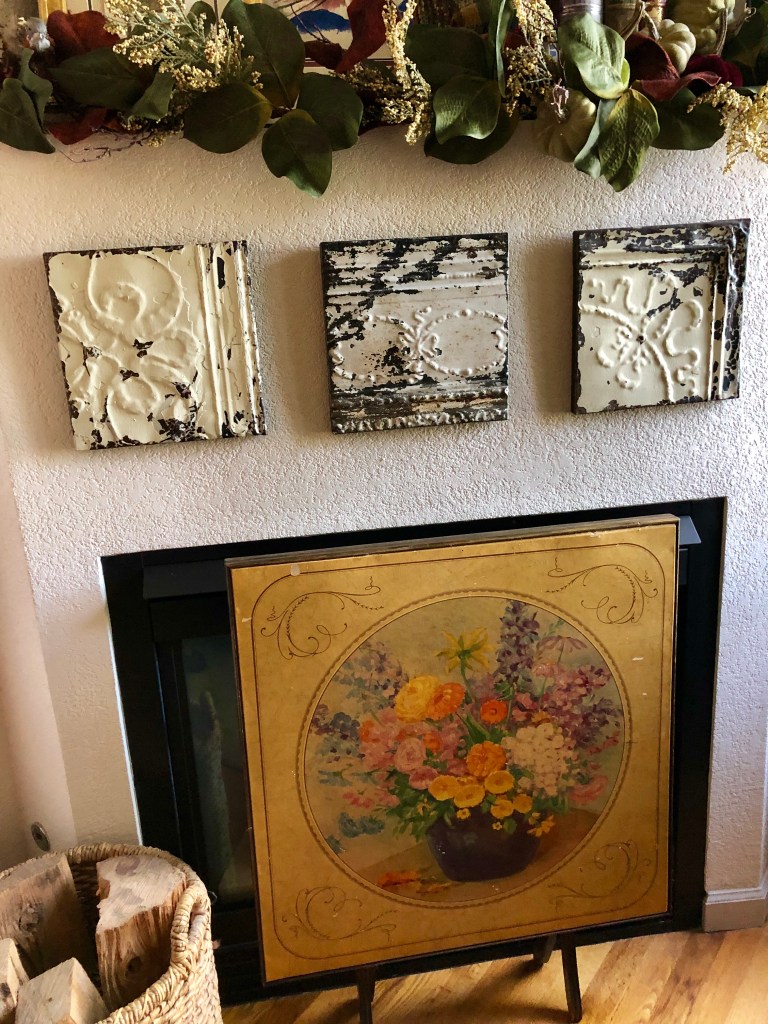
The folding bridge table in the photo is over eighty years old, and I have owned it for more than twenty of those years. During that time, it has served as an extra table for entertaining, a game table and even a fire screen.
But its usefulness is only part of the reason I keep it. The table came from the historic building where my husband and I were married. It dates from one of my favorite eras and is painted in the warm autumn colors I have always loved. It definitely shows signs of wear, some of which I’m sure I have contributed to. That has never bothered me.
I have always valued things with a history. Nicks, scratches, and faded places don’t diminish an object in my eyes. They make it more interesting. They suggest that it has been used, appreciated, and woven into someone’s life.
At one point in my career, I worked for a company that sold handbags and briefcases made from beautiful Italian leather. Customers sometimes questioned whether the leather would scratch. Yes, of course it would scratch. It was leather. We called the marks that appeared with use “the patina of wear.” Over time, the leather softened, deepened in color, and became more distinctive. Those signs of use were not flaws; they were what gave the piece its character.
Perhaps the same can be said of many of the things we own—and even of ourselves. Wear is evidence of living. A dining table bears the faint marks of family meals. A favorite chair softens to the shape of the person who sits in it. A well-read book develops a cracked spine and turned-down pages. These objects become familiar companions, carrying memories that something new simply cannot possess.
I have never felt that everything in my life needed to be new or perfect. In our current climate, I am even less inclined to discard something simply because it is worn, outdated, or no longer pristine. We are encouraged to replace rather than repair, to update rather than appreciate, and to see signs of age as reasons to move on. But every object we throw away must go somewhere.
I grew up in a small town that had what was then simply called the town dump. Residents brought their trash and added it to a large, ever-growing pile. Occasionally, the pile was plowed over, as though covering it somehow made it disappear. I found myself thinking about that dump the other day. What eventually happened to it as the pile continued to grow? It had to go somewhere. Trash does not cease to exist simply because we can no longer see it.
That memory has stayed with me. I feel a responsibility not to add unnecessarily to the mountains of things already discarded. But my attachment to older possessions is about more than environmental responsibility. I genuinely enjoy living with things that are familiar, useful, and connected to my past.
My bridge table is not perfect. Its surface is worn, and its age is evident. But it has survived for over eighty years and continues to find a place in my home and in my life. Its wear tells a story—of the historic building where we were married, of the people who used it before me, and of the many ways I have used it since.
I don’t see its imperfections as damage. I see them as its patina of wear: evidence of a long and useful life.
Peace be with you.


6 responses to “The Patina of Wear”
I love this and brilliant use as a fireplace screen! We have a table very similar to yours floating around somewhere. I guess one of my siblings has it, but whenever Mama had friends over for dinner, the grownups sat at the dining table and the little wooden table was set up as the children’s table.
I have this heavy, wooden kitchen table in my home and use it everyday as a creative space. The finish is worn around the edges and the surface has scars and stains from being used. I used to apologize to my daughter about the shape it’s in, but she would always smile and say, “I love it Mama. It looks like it’s served it’s purpose and been loved.” Her boyfriend offered to have it refinished, but I’m not sure she will.
LikeLike
Yes, I remember the card table for children at holiday dinners. Your wooden table sounds wonderful just as it is. All those scares and stains give it its unique character. ❤️
LikeLiked by 1 person
Thank you lovely and maybe that’s one of the reasons we’re drawn to real, wood furnishings? It keeps a record and bears the weight of what we give it. 💕
LikeLike
❤️
LikeLiked by 1 person
Your folding bridge table is beautiful! I love collecting well-loved, vintage pieces, especially when they are passed down from family and friends.
About 12 years ago, my mom gave me her wooden dining room table. It was the table I grew up with, so it is about as old as I am (45 years). I have held onto her dining room table all these years, and I plan on keeping it as long as it is functional.
I enjoyed reading your post today. Have a good day! 💜😊
LikeLike
Thank you! Your mother’s dining room table sounds like a treasure—not simply because of its age, but because it holds so many memories of growing up around it. I hope it remains part of your home for many years to come.❤️
LikeLiked by 1 person